Connection begins with knowing the person
A favorite song, a familiar photograph, or a conversation about a lifelong hobby can provide a starting point for time together. Dementia affects everyone differently, so companionship should reflect the person’s history, preferences, and current abilities.
The aim is to offer an adult relationship built on respect, patience, and attention.
Make communication easier
Approach calmly, reduce distractions, and allow time for a response. Use clear, short sentences and offer one choice or step at a time when needed. Speak directly to the person and include them in the conversation.
If they struggle to find a word, avoid rushing to correct or test them. Notice their expression and tone as well as their words.
Build a familiar, flexible day
A predictable routine can help organize daily life. Meals, rest, and activities can follow a familiar rhythm while leaving room for changing energy levels and preferences.
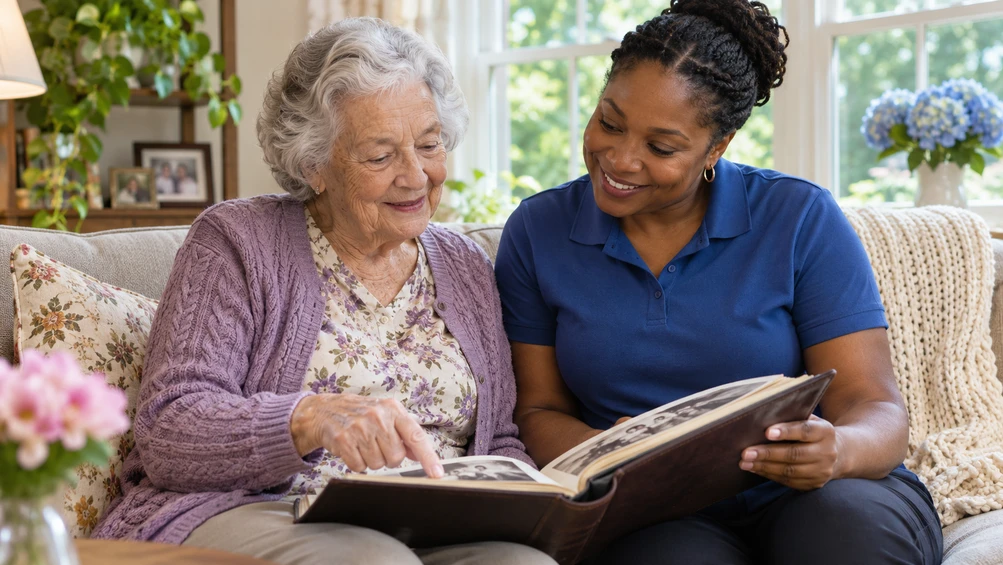
Companion activities might include listening to music, looking through photographs, folding towels together, or enjoying conversation. Choose activities the person welcomes and adapt them rather than insisting on completion.
Match the service to the care needs
At BrightSteps Homecare, we learn about a client’s routines and preferences when planning support. Families can share favorite activities, communication approaches, and what helps their loved one feel comfortable.
Some people also need hands-on personal care, mobility assistance, or close supervision. These needs should be discussed during assessment so the care plan reflects more than companionship alone. Family members can also discuss respite coverage that gives them time to rest or attend to other responsibilities.
Contact BrightSteps Homecare to discuss companionship and personal care options for your loved one.
Companion care does not diagnose or treat dementia and does not replace medical care.
Further reading: